

When acquiring or managing land for investment, agricultural use, or development, understanding the exact boundaries of the property is essential. Property boundaries define the legal limits of a parcel and determine where improvements, infrastructure, or operational activities can occur without encroaching on adjacent land.
Although fences, walls, or natural landmarks may appear to mark a boundary, these features do not always represent the official legal property lines.
Why Property Boundaries Matter
Uncertainty about property boundaries can lead to disputes with adjacent property owners, development delays, or unexpected legal complications. Improvements such as fencing, access roads, utility placement, or structures that cross boundary lines may create costly issues if the limits of the property are not verified beforehand.
Clearly defined boundaries also help protect the value of land assets and support informed decisions related to development planning, land division, or future property transactions.
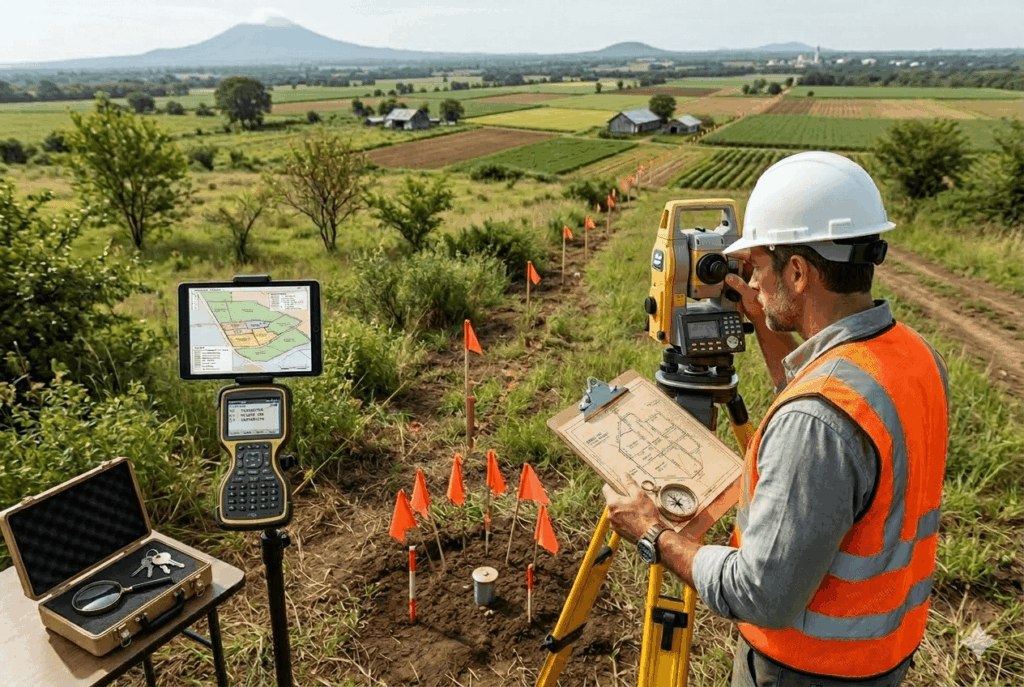
Reviewing the Deed or Property Title
One of the first steps in determining property boundaries is reviewing the recorded deed or property title. These documents typically describe the parcel using measurements, geographic coordinates, or references to neighboring parcels.
While this information establishes the legal description of the land, the technical language used in these documents can sometimes be difficult to interpret without professional assistance.
The importance of a land survey
A professional land survey is one of the most reliable ways to confirm the exact boundaries of a property. Surveys are conducted by licensed professionals and identify the legal limits of the parcel based on recorded property descriptions and physical markers.
An updated survey is particularly important when land will be improved, subdivided, or prepared for development.
Preventing Boundary Conflicts Before Improvements
Boundary conflicts often arise when improvements are made without verifying property lines first. Fences, structures, access points, or utility installations that extend beyond a parcel’s limits can create legal and operational complications.
Confirming property boundaries before beginning improvements helps reduce risk and ensures development activities remain within the legal limits of the property.

Coordination With Adjacent Property Owners
In some situations, communication with adjacent property owners can help clarify boundary questions and prevent misunderstandings. However, documented surveys and recorded property descriptions remain the primary reference for determining legal boundaries.
Conclusion
Understanding where a parcel of land begins and ends is an important part of responsible land ownership and asset management. Accurate boundary verification helps protect property value, supports development planning, and reduces the risk of future legal disputes.
For more information about land ownership, property boundaries, and direct land investment opportunities, visit Land By Owner to explore available properties and make informed acquisition decisions.