

When evaluating land in Florida for investment, agricultural use, or development, the physical characteristics of the property are only part of the equation. Equally important are the local zoning regulations that determine how the land may legally be used.
Zoning laws are established by local governments, typically counties or municipalities, and regulate how land can be developed, what types of structures are permitted, and what activities may take place on a parcel.
Below is a simplified overview of several zoning categories commonly found in Florida jurisdictions and the types of uses they may allow.
Residential Zoning (R)
Residential zoning is commonly designated for housing-related development and may restrict certain commercial activities in order to manage density, traffic, and land use compatibility.
Typical permitted uses may include:
Single-Family Residential Development
Detached housing structures designed for individual residential occupancy.
Multi-Family Residential Development
Duplexes, townhouses, condominiums, and apartment developments, depending on the specific residential zoning designation.
Accessory Structures
Garages, storage buildings, or additional accessory structures may be permitted subject to local zoning regulations.
Common Restriction:
Customer-facing commercial operations are generally not permitted in strictly residential zones, although certain limited professional or administrative activities may be allowed depending on local regulations.
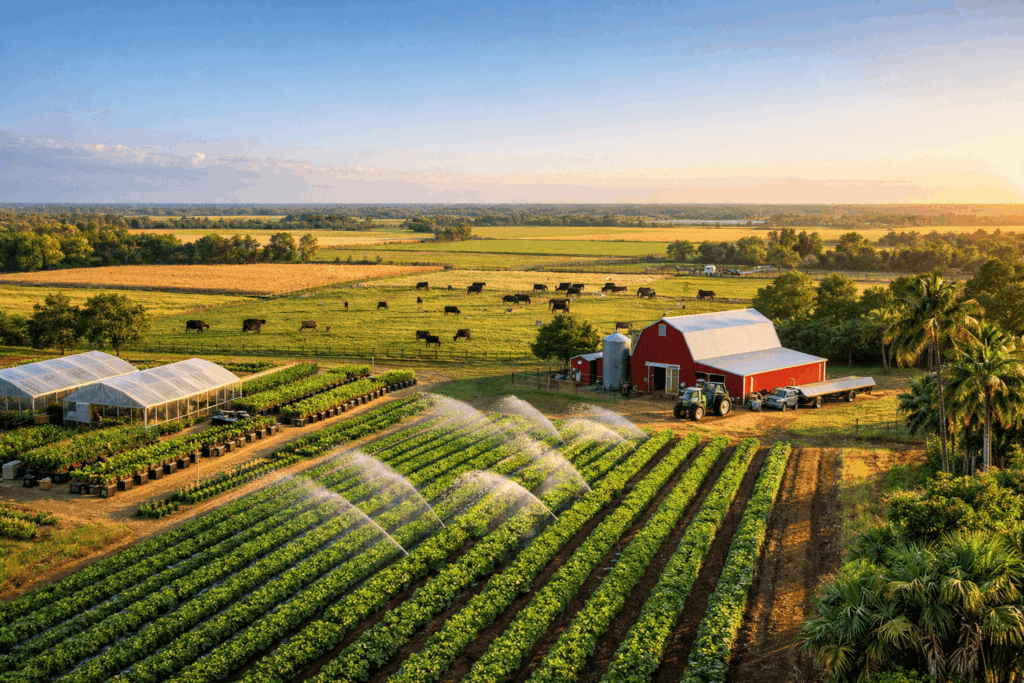
Agricultural Zoning (A or AG)
Florida contains significant acreage designated for agricultural use. These zones are typically intended to support farming, livestock operations, and other agricultural activities.
Typical permitted uses may include:
Agricultural Production
Crop cultivation, livestock operations, nurseries, and other agricultural activities.
Low-Density Residential Structures
Some agricultural zones may allow residential structures, often subject to larger minimum acreage requirements.
Agricultural Buildings
Barns, equipment storage structures, stables, silos, and similar operational facilities.
Potential Tax Classification Benefit:
In certain cases, land used for bona fide commercial agricultural activity may qualify for agricultural classification under Florida law. Eligibility and tax treatment are determined by the county property appraiser and require documented agricultural use.
Mixed-Use Zoning (MX or MU)
Mixed-use zoning is increasingly used in growing municipalities to support development that integrates multiple compatible land uses within a single project or district.
Examples of mixed-use configurations may include:
Vertical Mixed Use
Buildings that combine retail, service, or office space on lower floors with residential or professional space above.
Horizontal Mixed Use
Developments where residential, commercial, recreational, and office uses are incorporated within the same planned area.
Mixed-use zoning is often intended to encourage efficient land use and coordinated development patterns.

Conclusion
Before acquiring land in Florida for development, agricultural operations, or investment purposes, it is important to review both the local zoning map and the Future Land Use Map with the appropriate county or municipal planning department. A property’s appearance alone does not determine how it may legally be used.
Understanding the zoning classification associated with a parcel can help investors and developers evaluate whether the property aligns with their intended use and development strategy.
For additional information about land ownership, zoning considerations, and direct land investment opportunities, visit Land By Owner to explore available properties and evaluate potential acquisition opportunities.