
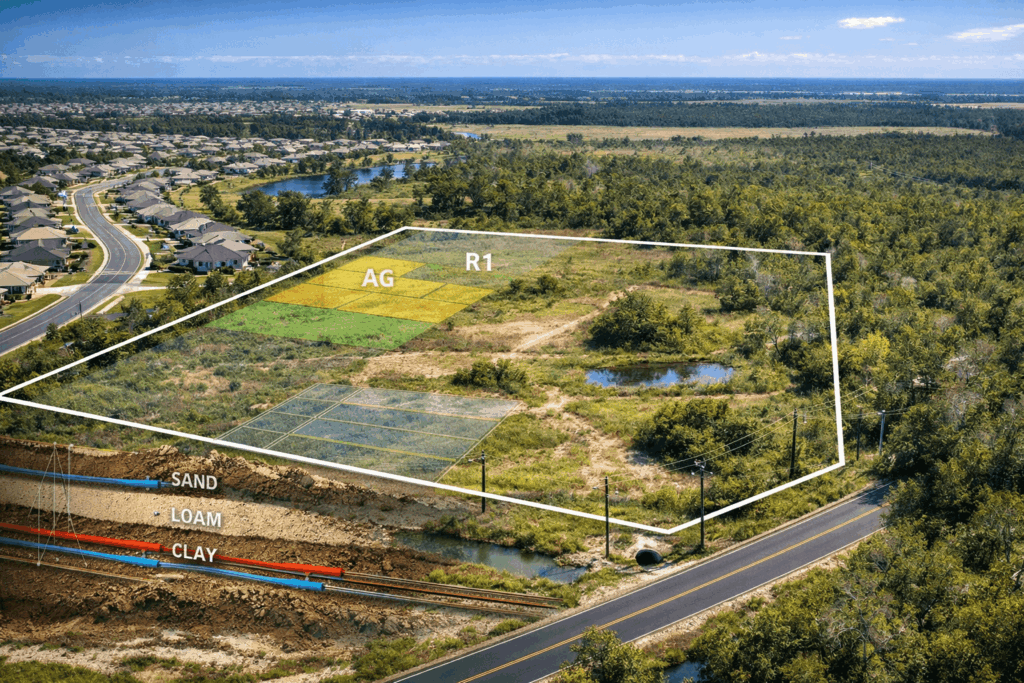
Land parcels in Florida are often evaluated based on acreage, price, and location. However, professionals involved in construction, development, or land investment typically analyze additional factors that can influence project feasibility, development timelines, and operational costs.
For investors, developers, and construction professionals, the physical characteristics of a parcel often determine whether a project proceeds efficiently or encounters delays. Access conditions, soil composition, infrastructure availability, and regulatory requirements can significantly influence how land may be utilized.
Understanding these site characteristics allows land investors and development planners to evaluate parcels more effectively when assessing potential acquisition opportunities.
This overview highlights several site conditions that construction professionals commonly review when evaluating land parcels across Florida.
Why Site Characteristics Matter in Land Development
Construction feasibility often depends more on the characteristics of the land parcel than on the design of a future structure. Environmental conditions, infrastructure access, and regulatory requirements can influence permitting timelines, site preparation requirements, and development planning.
Professionals evaluating land for development frequently recognize that parcels with similar appearances may involve very different preparation requirements once technical assessments are conducted.
Common considerations include:
- accessibility for construction vehicles and equipment
- site preparation requirements
- permitting complexity
- infrastructure availability
Evaluating these elements early in the acquisition process can help investors and developers better understand the practical implications of site conditions.
Key Site Conditions Construction Professionals Evaluate
1. Legal Road Access
Construction projects require reliable road access for equipment, material delivery, and workforce transportation. Parcels with recorded road access and clear easement documentation typically allow development activity to proceed more efficiently.
Parcels without verified access may require additional legal review or infrastructure improvements before construction activities can begin.
2. Terrain Conditions
Site grading and elevation conditions can influence development planning. Parcels with relatively stable and level terrain may require less site preparation, while uneven terrain or low-lying areas may require grading, fill material, or drainage adjustments.
Understanding terrain characteristics can assist development planners in estimating potential site preparation requirements.
3. Soil Characteristics
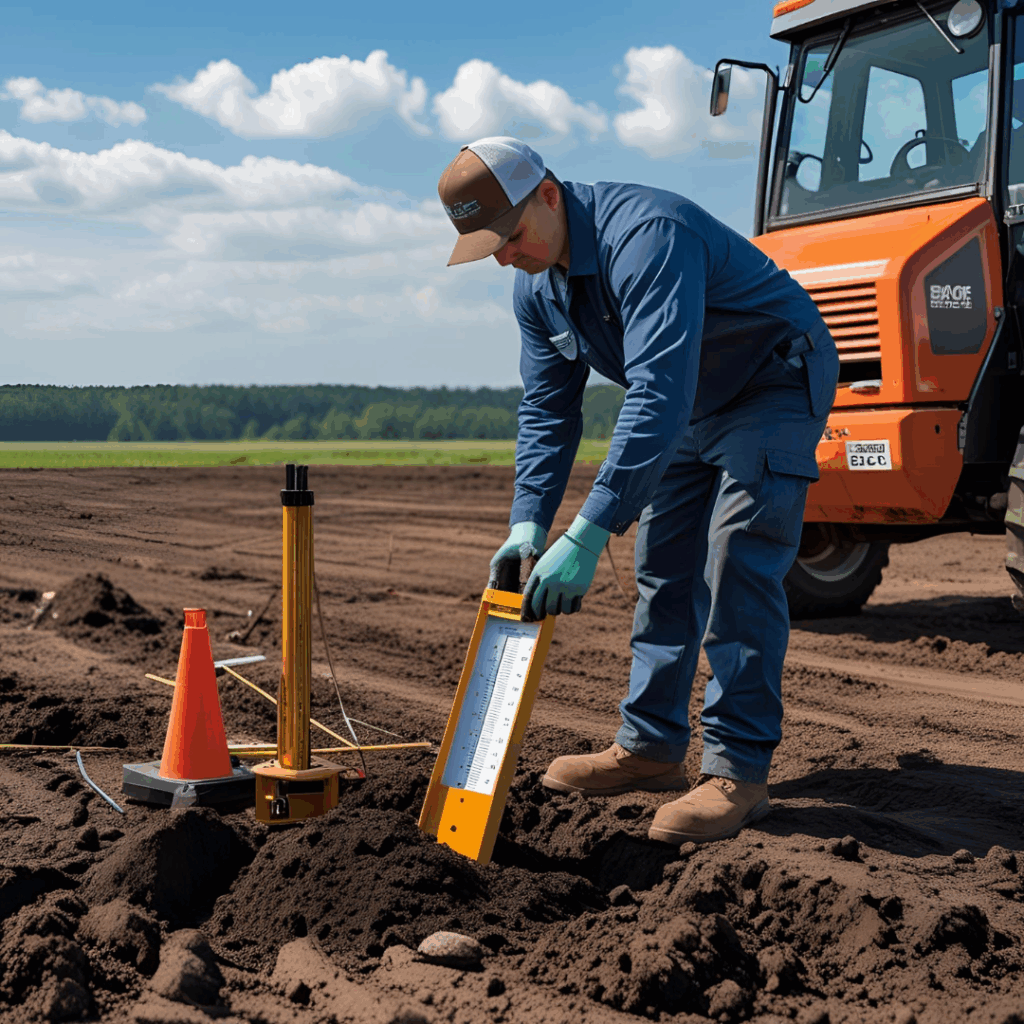
Soil composition plays an important role in determining foundation design and site preparation requirements. Soil conditions with adequate load bearing capacity may allow standard construction approaches, while more complex soil conditions may require engineered solutions.
Professional soil analysis is typically conducted during development planning to determine appropriate construction methods.
4. Utility Infrastructure
Access to utility infrastructure such as water service, wastewater systems, electrical service, and communications networks can influence development feasibility.
Parcels located near existing utility infrastructure may allow for more efficient project planning, while parcels requiring long distance utility extensions may require additional infrastructure investment.
5. Zoning and Land Use Regulations
Local zoning frameworks establish permitted land uses, development density, and building requirements. Parcels with zoning classifications aligned with intended development activity may allow for more predictable permitting processes.
Parcels subject to conditional approvals or additional regulatory overlays may require extended planning review.
Additional Factors That Influence Development Planning
Beyond basic site conditions, development professionals often evaluate additional regulatory and environmental factors.
6. Flood Risk Considerations
Flood zone classifications may influence elevation requirements, foundation design, and construction planning. Parcels located within higher risk flood zones may require additional engineering considerations.
7. Environmental Constraints
Environmental protections such as wetlands, habitat conservation areas, and buffer requirements may affect how much of a parcel is available for development.
Environmental review is often conducted during early stages of project planning.
8. Permitting Environment
Permitting procedures and administrative timelines vary between counties and municipalities. Development professionals often evaluate local regulatory processes when planning project schedules.
9. Surrounding Land Use Patterns
The land uses surrounding a parcel may influence development compatibility and long term operational planning. Reviewing adjacent zoning and development patterns can provide context for future project considerations.
10. Verified Development Feasibility
Development feasibility is typically confirmed through engineering analysis, zoning verification, and permitting review. Parcels marketed with clear documentation and verifiable site information often allow investors and developers to conduct due diligence more efficiently.
Strategic Evaluation of Land Parcels
Land investors and development professionals often prioritize parcels that demonstrate clear access, predictable regulatory frameworks, and manageable site preparation requirements.
These characteristics can simplify development planning and reduce uncertainty during the due diligence process.
Because land development involves multiple technical and regulatory considerations, thorough site evaluation is commonly conducted before acquisition decisions are finalized.
Evaluating Land Opportunities
Investors and development professionals frequently conduct independent due diligence when evaluating land opportunities. Reviewing zoning documentation, infrastructure availability, environmental conditions, and regional planning resources can provide important context during this process.
Land By Owner provides access to owner direct land listings that may be relevant for investors conducting independent research and land evaluation. Parcels are presented with transparent pricing and without intermediary brokerage structures, allowing investors to review opportunities according to their own business objectives.