

Scarcity and Supply Constraints
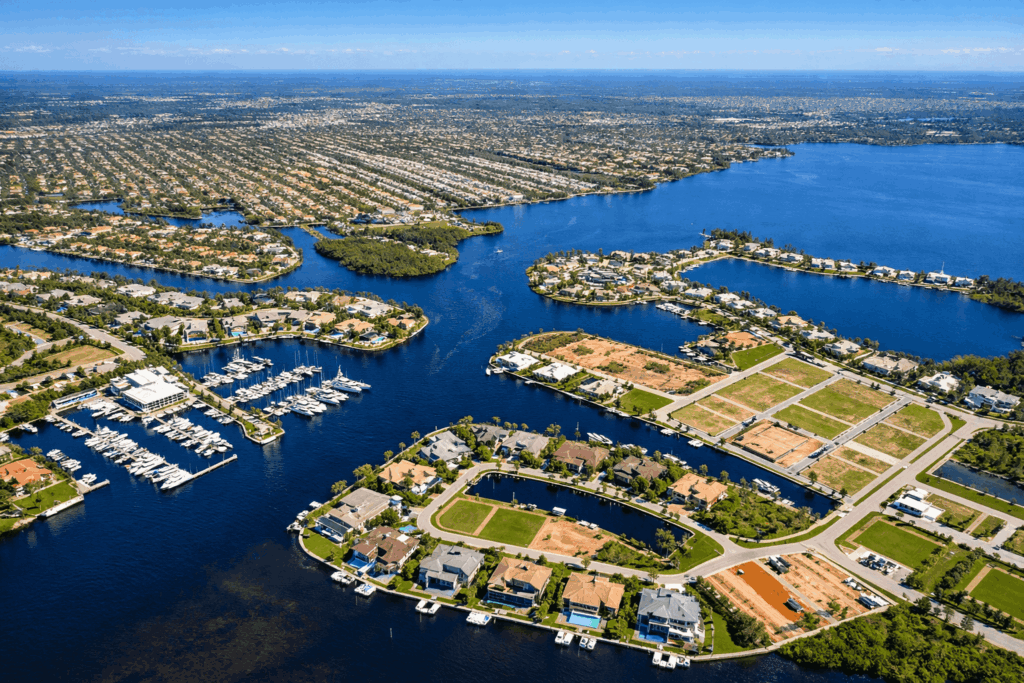
Within Florida land markets, parcels with direct access to canals, lakes, and navigable waterways represent a limited subset of available inventory. Unlike inland land, which may expand through horizontal development, waterfront availability is constrained by geography, environmental limitations, and regulatory controls.
These constraints influence how such assets are evaluated within a business-purpose acquisition framework, particularly where access, location, and regulatory status affect usability and transferability.
This material is intended solely for business-purpose land transactions and is not directed toward consumer residential use.
Nautical Access and Physical Characteristics
The functional characteristics of a waterfront parcel directly affect its usability and positioning in the market:
- Water access and navigability
- Canal depth, connectivity, and structural restrictions such as fixed bridges influence potential use
- Proximity to larger bodies of water may affect marketability depending on intended use
- Shoreline infrastructure
- Existing seawalls or stabilization features may reduce initial site preparation requirements
- Condition and compliance status must be independently verified
- Permitting considerations
- Dock, lift, or shoreline improvements may require approvals from federal, state, and local authorities
- Permit feasibility can impact transaction timelines and buyer interest
Risk Identification and Due Diligence
Waterfront land transactions require structured evaluation of environmental and regulatory variables:
- Flood zone classification
- FEMA designations and base flood elevation requirements influence development parameters and cost considerations
- Environmental constraints
- Wetlands, protected species, and jurisdictional boundaries may limit usable area
- Title and access
- Legal access, easements, and title condition must be confirmed prior to acquisition and disposition
All factors should be validated through independent third-party sources and documented accordingly.
Holding Strategy and Capital Allocation Considerations
Holding waterfront land as part of a broader portfolio strategy requires alignment with defined business objectives:
- Carrying costs, including taxes and maintenance
- Liquidity expectations and disposition timelines
- Asset positioning relative to development readiness
Land holding does not eliminate exposure to market variability, regulatory changes, or transaction delays. These factors should be incorporated into acquisition criteria and ongoing review.
Disposition and Market Positioning
Exit strategies for waterfront parcels are typically oriented toward business-to-business transactions:
- Builders seeking development-ready lots
- Investors targeting specific geographic or infrastructure characteristics
Transaction outcomes depend on the level of preparation, documentation completeness, and alignment between asset characteristics and buyer requirements.
Positioning should focus on verifiable attributes rather than projected outcomes.
High-Growth Market Considerations
Florida continues to experience population growth and capital activity, which may influence land demand in certain regions. Waterfront parcels with defined access and documented usability may attract attention within specific market segments.
However, market conditions are variable and should not be assumed to produce consistent outcomes. Acquisition decisions should be based on current data, verified constraints, and defined exit parameters.
Asset Evaluation Framework
Evaluation of canal and lakefront land should be grounded in objective criteria:
- Verified riparian or access rights
- Physical usability and infrastructure status
- Regulatory and environmental constraints
- Market comparables based on closed transactions
A disciplined approach reduces ambiguity and supports defensible transaction decisions.
Conclusion
Florida waterfront land transactions require careful documentation, independent verification, and clear alignment with business-purpose objectives. Asset performance is influenced by physical characteristics, regulatory conditions, and market dynamics, all of which must be evaluated without reliance on projected outcomes.
For business-purpose land acquisition and disposition, Land by Owner provides a platform focused on property visibility and transaction facilitation. Users are responsible for independently verifying all property details, conducting appropriate due diligence, and ensuring that any transaction structure aligns with applicable regulatory frameworks and business-purpose classification.