
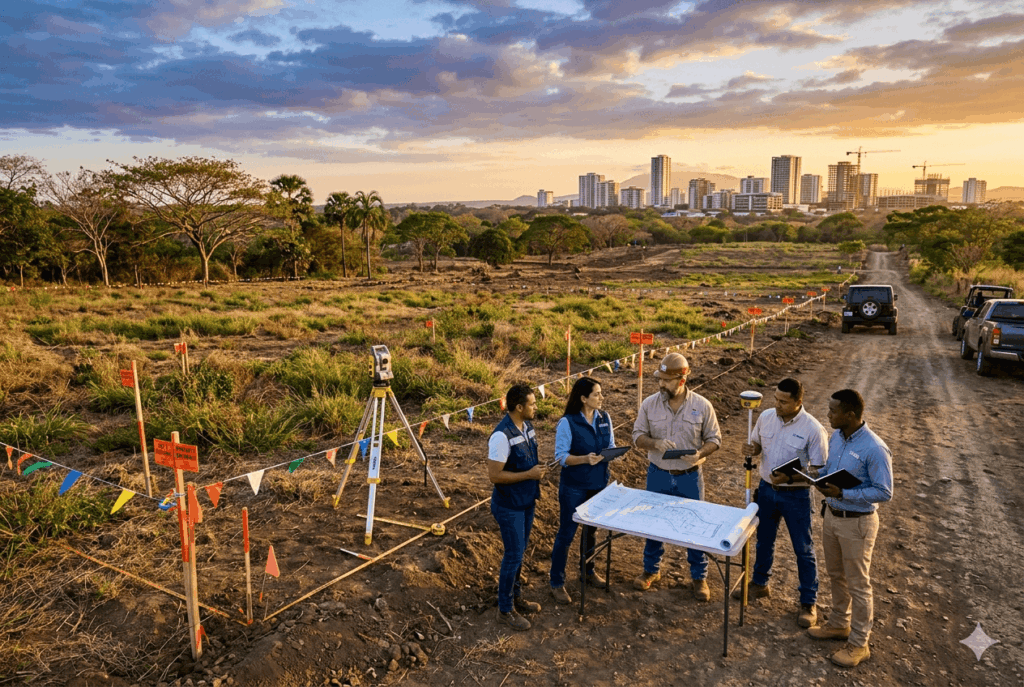
Acquiring land is often the first stage of a broader real estate strategy. For investors, developers, and property operators, the next steps involve evaluating how the land can be positioned, improved, or prepared for future development or asset management.
Understanding how to organize the property early can support long-term planning and operational flexibility.
Confirm Property Boundaries
Before making physical improvements to a property, verifying the legal boundaries is an important first step.
A professional land survey can help:
- Confirm exact property lines
- Identify easements or access corridors
- Prevent boundary disputes with neighboring parcels
Accurate boundary information also supports future development planning, subdivision feasibility analysis, and infrastructure placement.

Site Preparation and Vegetation Management
Many land parcels require initial site preparation before they can be utilized effectively.
Typical preparation activities may include:
- Brush removal and vegetation management
- Clearing access paths
- Addressing uneven terrain
- Improving drainage conditions
These steps can make the land easier to evaluate for potential development or operational uses.
Establish Property Access
Vehicle access is often necessary for site inspections, contractor access, and equipment transport.
Access improvements may include:
- Establishing a graded entry point
- Creating a gravel or stabilized access road
- Identifying future driveway or internal road locations
Proper access planning supports both property maintenance and potential development activity.
Evaluate Future Development Potential
Property owners frequently begin evaluating development feasibility early in the ownership process.
This may include reviewing:
- Local zoning classifications
- Permitting requirements
- Density allowances
- Infrastructure availability
Understanding these factors helps determine how the land may be positioned for future residential, agricultural, or commercial development depending on local regulations.
Infrastructure Planning
Long-term property planning often includes evaluating infrastructure considerations such as:
- Water access or well installation
- Electrical service availability
- Septic system feasibility
- Stormwater management
Early evaluation can simplify future construction planning and reduce project delays.

Land Improvement and Long-Term Asset Planning
Some owners implement incremental improvements to prepare land for future use or increase operational flexibility.
Examples may include:
- Tree planting or landscape planning
- Soil preparation for agricultural uses
- Site grading for future construction areas
These improvements can support a range of long-term land strategies.
Property Monitoring and Maintenance
Landowners often implement basic property monitoring to protect their investment.
This may include:
- Periodic site inspections
- boundary signage or fencing
- remote monitoring equipment
- ongoing vegetation management
Routine oversight helps maintain the condition of the property over time.
Strategic Land Ownership
Land ownership can serve multiple long-term objectives, including development planning, agricultural use, or real estate investment strategies.
Taking early steps to organize and prepare a property can support future flexibility and informed decision-making.
Exploring Additional Land Opportunities
Land By Owner connects buyers with rural and development-ready land that may support real estate investment and development planning, subject to local zoning and permitting requirements.
Investors and developers can review available properties based on their operational objectives, project planning timelines, and long-term real estate strategies.