
Glamping on privately owned land has become an appealing option for individuals seeking outdoor comfort without full infrastructure buildout. When approached correctly, it can remain a low-risk, personal-use activity that avoids triggering regulatory scrutiny tied to commercial use or consumer-facing accommodations. The key is disciplined planning, clear intent, and careful separation from anything that resembles a business-purpose operation.
Defining Personal Recreational Use
Before placing any improvements on land, it is critical to establish that the intended use is strictly personal and recreational. This distinction matters because once land use begins to resemble short-term rentals, campground operations, or income-generating activity, different regulatory frameworks may apply.
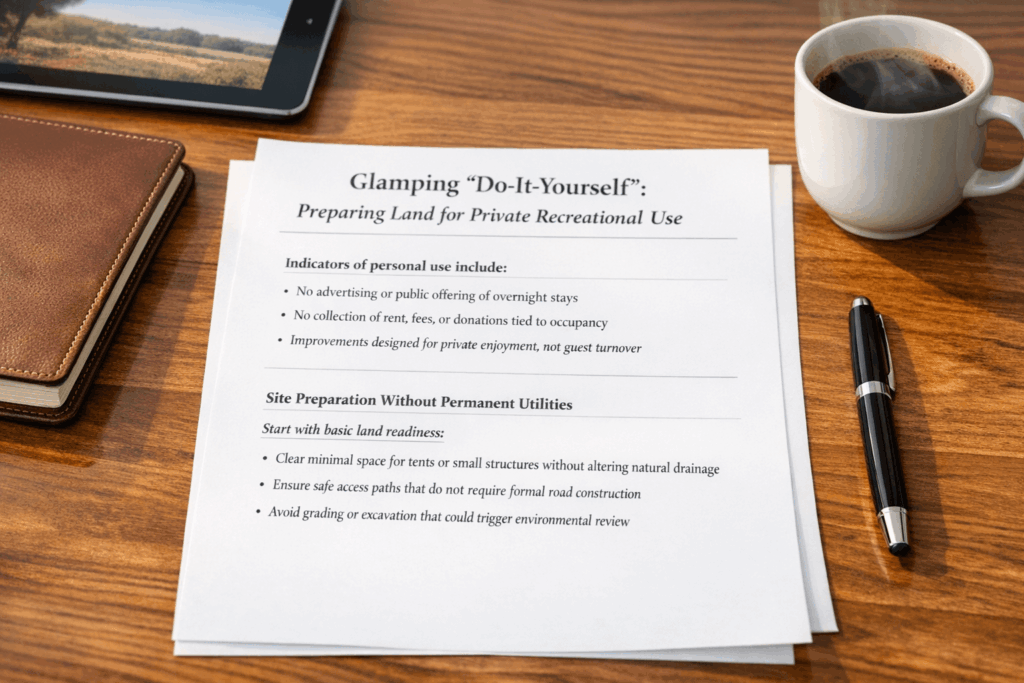
Indicators of personal use include:
- No advertising or public offering of overnight stays
- No collection of rent, fees, or donations tied to occupancy
- Improvements designed for private enjoyment, not guest turnover
Maintaining this boundary helps reduce exposure to consumer protection laws and local permitting requirements tied to hospitality use.
Site Preparation Without Permanent Utilities
A do-it-yourself glamping setup often relies on temporary or portable systems rather than permanent utility connections. This approach can reduce upfront costs and limit development complexity, but it must still be executed responsibly.
Start with basic land readiness:
- Clear minimal space for tents or small structures without altering natural drainage
- Ensure safe access paths that do not require formal road construction
- Avoid grading or excavation that could trigger environmental review
The goal is to maintain the land in a largely natural state while creating a functional and safe recreational area.
Portable Solar Energy Considerations
Portable solar systems are a practical solution for off-grid energy needs. These setups typically include solar panels, battery storage, and basic inverters to power lighting, small appliances, or device charging.
To stay within a low-risk profile:
- Use non-permanent, movable solar units rather than fixed installations
- Avoid wiring systems into permanent structures unless properly permitted
- Keep usage limited to personal consumption, not multi-user distribution
This helps ensure the energy system remains clearly recreational and not part of a broader utility framework.
Composting Toilets and Sanitation
Sanitation is one of the most sensitive aspects of off-grid land use. Composting toilets are commonly used in glamping setups, but they must be handled carefully to avoid environmental or health concerns.
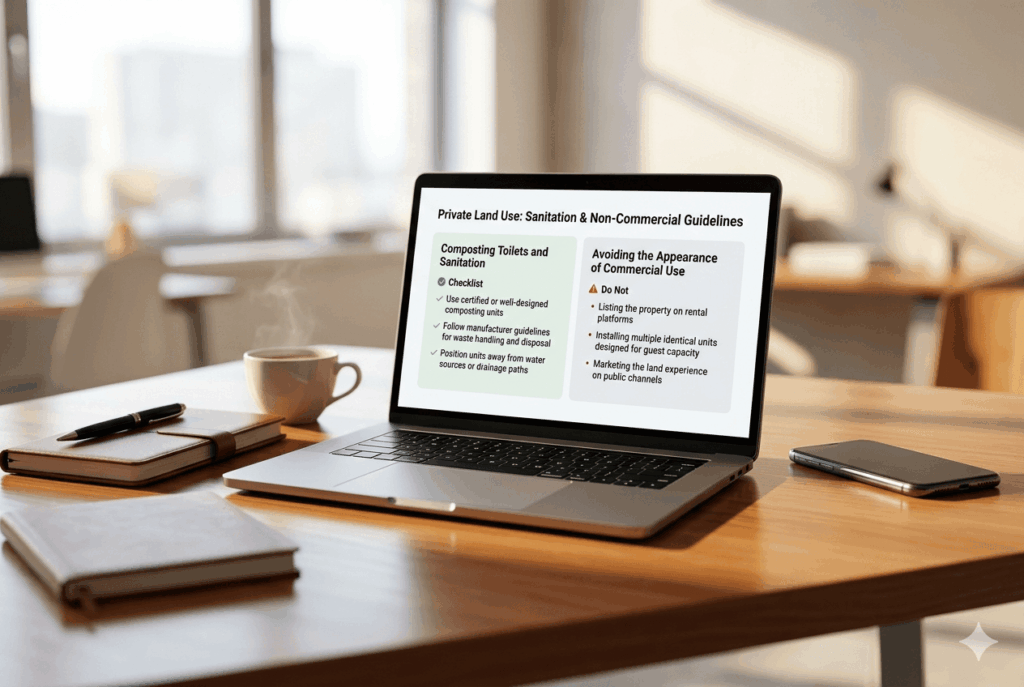
Best practices include:
- Use certified or well-designed composting units
- Follow manufacturer guidelines for waste handling and disposal
- Position units away from water sources or drainage paths
Improper sanitation practices can quickly shift a low-impact setup into a compliance concern, especially if complaints or inspections arise.
Avoiding the Appearance of Commercial Use
Even if no income is currently generated, certain behaviors can create the appearance of a business-purpose operation. This can increase scrutiny from local authorities or regulators.
Avoid:
- Listing the property on rental platforms
- Installing multiple identical units designed for guest capacity
- Marketing the land experience on public channels
Consistency between intent, setup, and behavior is essential. The land should clearly reflect private use at all times.
Documentation and Intent Clarity
From a risk control standpoint, documenting your intent can be valuable. While this is not a formal requirement, it helps demonstrate consistency if questions arise.
Consider maintaining:
- A simple written statement of personal recreational use
- Records of equipment purchases for personal use
- Photos showing non-commercial setup and limited scale
This type of documentation supports defensibility and reduces ambiguity.
Summary
A do-it-yourself glamping setup can be a practical and enjoyable way to use land without immediate utility infrastructure. The most important factor is maintaining a clear boundary between personal recreation and commercial activity. Portable solar systems and composting toilets can support this approach when used responsibly and without permanence. Careful planning, minimal land disturbance, and consistent non-commercial behavior help reduce regulatory exposure. For those exploring land ownership opportunities aligned with private recreational use, platforms like Land by Owner can provide access to suitable properties while keeping flexibility and control at the forefront.