
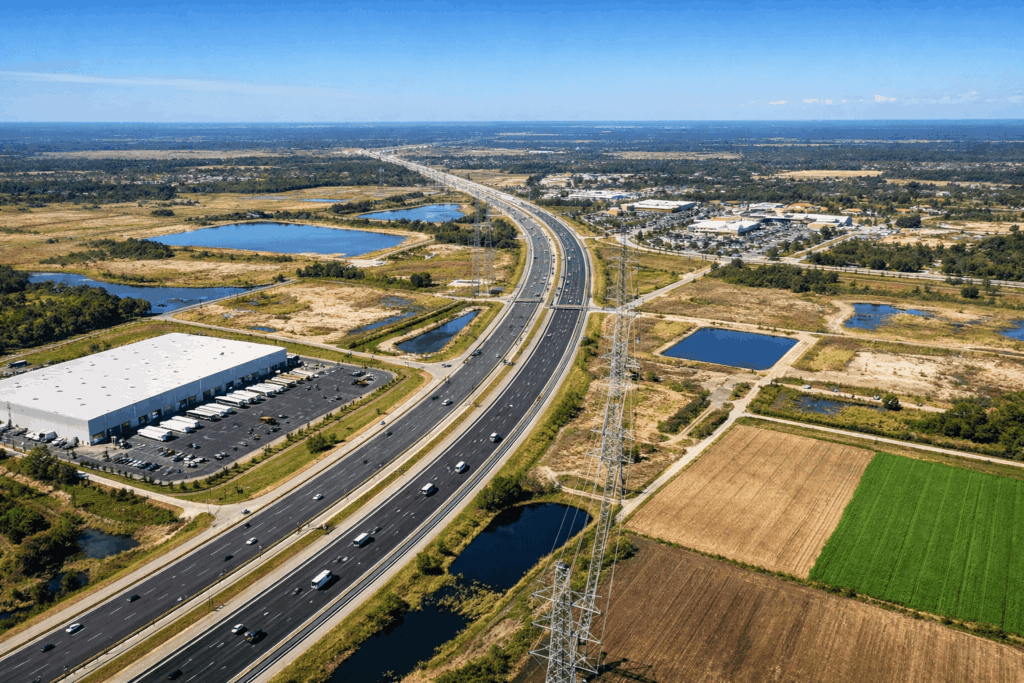
Land acquisition decisions are often influenced by visible growth such as new neighborhoods or expanding retail corridors. However, experienced land investors typically evaluate a different set of signals. Long term infrastructure planning frequently provides earlier insight into how regions may evolve over time.
Across Florida, public infrastructure planning plays a central role in shaping how land can eventually be utilized. Transportation improvements, utility expansion, and public service investments can gradually transform areas that previously had limited development viability. For investors focused on long term land positioning, understanding these planning signals can help inform strategic acquisition decisions.
This article reviews how infrastructure planning may influence land usability in Florida and highlights factors that land investors often evaluate when reviewing regional growth patterns.
Infrastructure as a Structural Growth Indicator
Population growth alone does not necessarily change how land can be used. Accessibility, utility availability, and regional services often determine whether land can support future residential, commercial, agricultural, or operational uses.
When infrastructure improvements occur, land characteristics can change in practical ways. Transportation access may improve logistical viability. Utility expansion may increase the range of permitted uses. Public services may support broader community development.
Florida’s ongoing population growth requires continued investment in critical infrastructure systems, including:
- Transportation corridors and highway expansion
- Water and sewer infrastructure
- Electrical grid and broadband networks
- Public services such as education and healthcare facilities
Land located near planned infrastructure corridors may experience changes in usability as projects move through planning, funding, and construction phases. Many investors review these planning timelines when evaluating long term land holding strategies.
Planning Signals Often Reviewed by Land Investors
Professional land investors frequently review planning documents and regional infrastructure updates to better understand how development patterns may evolve. These signals are often available through county planning departments, transportation authorities, and regional economic development reports.
Common infrastructure indicators include:
- Highway expansion projects and new interchanges
- County road improvements and rural corridor upgrades
- Planned utility extensions
- New public facilities such as schools or hospitals
- Industrial or employment center development
Transportation projects are often one of the most visible catalysts for regional change. New roadway access can improve connectivity between rural areas and established population centers. This change in accessibility can alter how land is evaluated for logistics operations, commercial use, or future development planning.
Utility expansion is another important factor. Water, sewer, electricity, and broadband availability can expand the range of potential land uses. Areas scheduled for utility service improvements may attract attention from developers, operators, or long-term land investors reviewing future project feasibility.
Public institutions also provide useful signals. Schools, healthcare facilities, and civic infrastructure are typically planned based on demographic projections and regional service needs. Their development may reflect broader planning expectations for surrounding communities.
Employment and commercial hubs represent another factor. Industrial parks, logistics centers, and mixed use commercial districts often attract workforce demand and supporting services. Land located near these areas may gain relevance for supporting business operations or future development opportunities.

Long Term Land Positioning
Unlike developed real estate assets, raw land often functions as a strategic long term holding within a broader portfolio. Its value to investors frequently relates to flexibility of use and alignment with regional planning trends.
Land investors often evaluate parcels based on several strategic considerations:
- Location relative to long term infrastructure planning
- Accessibility improvements over time
- Regional population and employment trends
- Zoning and land use planning frameworks
- Future operational or development optionality
Because infrastructure projects typically progress over extended timelines, many investors view land as a patient asset rather than a short-term transaction.
Evaluating Land Opportunities
Investors who review infrastructure planning alongside land characteristics may gain a clearer understanding of how different areas could evolve over time. While no planning outcome is guaranteed, infrastructure development can provide insight into how local governments anticipate regional growth and service needs.
For those researching land acquisition opportunities, reviewing publicly available planning resources and regional development initiatives can provide useful context when evaluating potential land positions.
Land By Owner provides access to owner direct land listings that may be suitable for investors conducting independent land research and due diligence. Parcels are presented with transparent pricing and without intermediary brokerage layers, allowing investors to evaluate opportunities according to their own business objectives.