
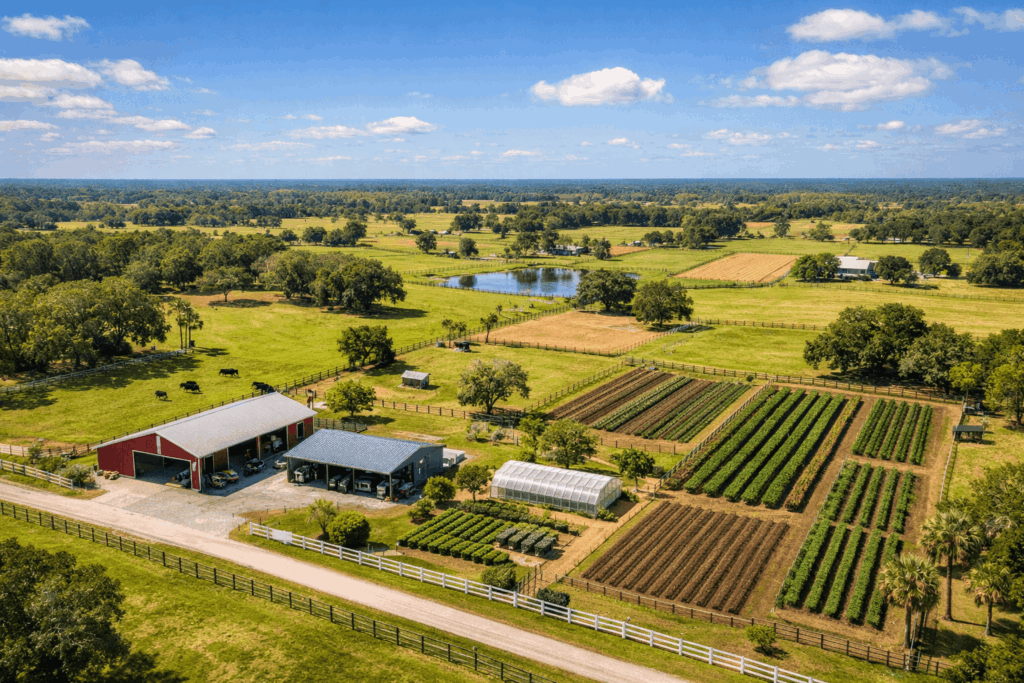
Florida continues to attract strong interest from buyers seeking small acreage properties suitable for agricultural use, land investment, and rural enterprise development. These properties often provide practical opportunities for agricultural production, land improvement projects, and diversified rural income activities.
Small agricultural parcels allow operators and investors to utilize land efficiently while maintaining manageable operating scale. Many buyers pursue these properties for agricultural production, small livestock operations, specialty crop cultivation, or land holding strategies.
Factors Supporting Demand for Small Acreage Agricultural Land
1. Growth of Small Scale Agricultural Enterprises
Agricultural entrepreneurs are increasingly utilizing smaller parcels for targeted production activities such as poultry operations, specialty produce cultivation, apiaries, and small livestock management. These operations allow efficient use of land while supporting agricultural revenue generation.
2. Favorable Agricultural Conditions in Florida
Florida’s extended growing seasons and mild winters create favorable conditions for agricultural production throughout much of the year. These conditions support crop rotation, livestock management, and diversified agricultural activities.
3. Availability of Agricultural Zoning
Many counties including Marion County, Levy County, Citrus County, Hernando County, Polk County, and Osceola County maintain zoning classifications that support agricultural land use. These classifications often allow barns, livestock facilities, equipment storage, fencing, and crop production activities.
Buyers should always verify zoning regulations and permitted uses with the applicable county planning department before acquiring property.
4. Land Utilization Flexibility
Smaller agricultural parcels allow landowners to develop agricultural infrastructure such as greenhouses, grazing areas, irrigation systems, or specialty crop production zones. Proper planning can support efficient agricultural operations while preserving land value.
5. Competitive Entry Points for Agricultural Land Investment
Compared with many other regions in the United States, Florida still offers competitive pricing per acre in several rural counties. This creates opportunities for investors and agricultural operators seeking entry level agricultural property holdings.

Common Characteristics Buyers Evaluate
Agricultural land purchasers frequently evaluate the following factors when reviewing small acreage opportunities.
- Reliable water availability including wells, ponds, canals, or irrigation capability.
- Usable terrain suitable for agricultural development, livestock areas, or cultivation.
- Appropriate agricultural zoning classifications such as A1, A2, AR, or RR depending on the county.
- Limited restrictive covenants that could interfere with agricultural activity.
- Expansion capacity for additional agricultural infrastructure or production areas.
- Soil conditions appropriate for cultivation and pasture development.
- Adequate property access for equipment and agricultural operations.
Potential Agricultural Uses
Small acreage agricultural land may support a variety of operational models depending on zoning and local regulations.
- Poultry production operations
- Small livestock management including goats or sheep
- Apiary operations for honey production
- Specialty crop cultivation
- Greenhouse production
- Nursery operations
- Pasture management and rotational grazing
- Agricultural equipment storage and staging
Agricultural buyers should evaluate each property based on its operational suitability and regulatory compliance.
Due Diligence Prior to Acquisition
Agricultural land purchasers should complete thorough property evaluations prior to acquisition.
- Verify zoning classification and permitted agricultural uses.
- Confirm availability of utilities including electrical access and water sources.
- Evaluate soil conditions, drainage, and land usability.
- Review flood zone maps and environmental considerations.
- Confirm county requirements for wells, agricultural structures, fencing, and equipment -storage.
- Estimate improvement costs associated with agricultural development.
- Consult experienced rural land professionals familiar with agricultural property transactions.
Proper due diligence helps ensure the land supports the intended agricultural use or investment strategy.
Land Development and Agricultural Operations Planning
Effective agricultural land development may include planning for infrastructure and sustainable land management practices.
- Solar systems for agricultural operations
- Water management and irrigation planning
- Soil management and nutrient improvement
- Rotational grazing for pasture health
- Native vegetation conservation
- Pollinator support through crop selection and habitat planning
Agricultural production planning can allow smaller parcels to operate efficiently while supporting long term land value.
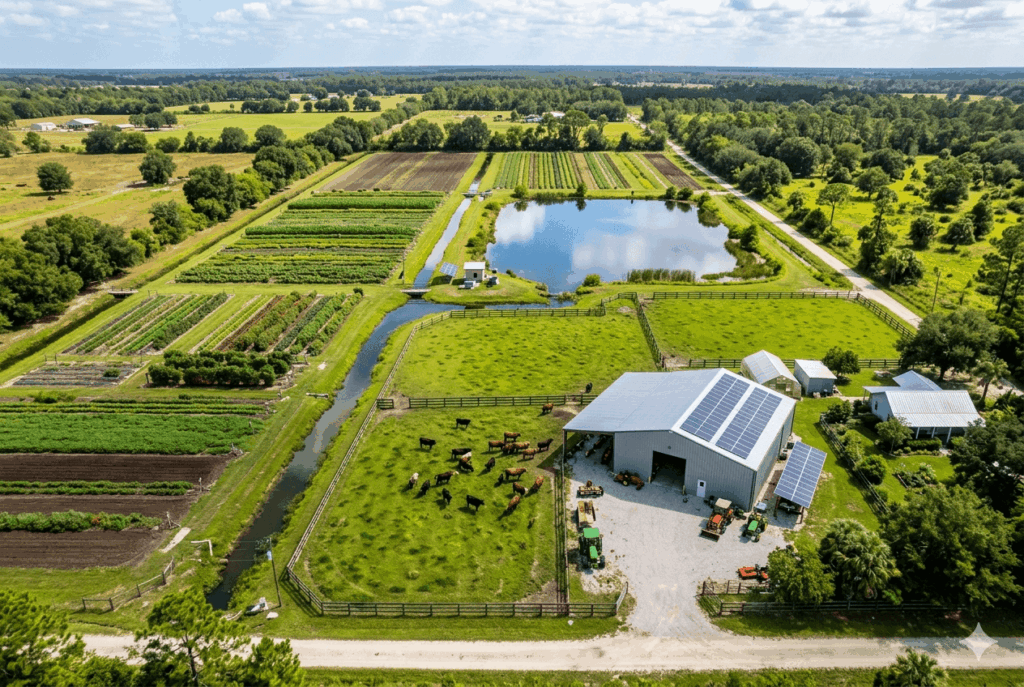
Exploring Agricultural Land Opportunities
Land By Owner focuses on connecting buyers with rural properties suitable for agricultural use, land investment strategies, and small scale agricultural enterprise development.
Buyers seeking land for agricultural production, operational expansion, or long term rural land investment can explore available opportunities based on their operational requirements and development plans.