

Acquiring undeveloped land for commercial or investment purposes requires evaluation of essential infrastructure components. For properties without municipal utility access, private septic systems and water wells are often necessary to support agricultural operations, development planning, or future resale positioning.
Understanding installation requirements, regulatory approvals, and cost variables is critical when underwriting land as a business asset.
Infrastructure Relevance for Commercial Land
In areas without access to public water and sewer systems, private wastewater and water supply systems may be required to support permitted commercial or agricultural use.
Infrastructure feasibility directly affects:
- Development planning
- Site marketability
- Operational usability
- Exit strategy flexibility
- Asset valuation
These factors should be evaluated prior to acquisition or during due diligence.
Soil Testing and Wastewater Feasibility
Before septic system approval, local authorities typically require a percolation test to evaluate soil absorption capacity. Soil composition significantly influences system design, engineering requirements, and total installation cost.
- Commercial buyers should:
- Confirm county testing requirements
- Retain written results
- Evaluate engineering implications
- Incorporate outcomes into acquisition underwriting
Purchase agreements should include appropriate feasibility contingencies aligned with commercial objectives.
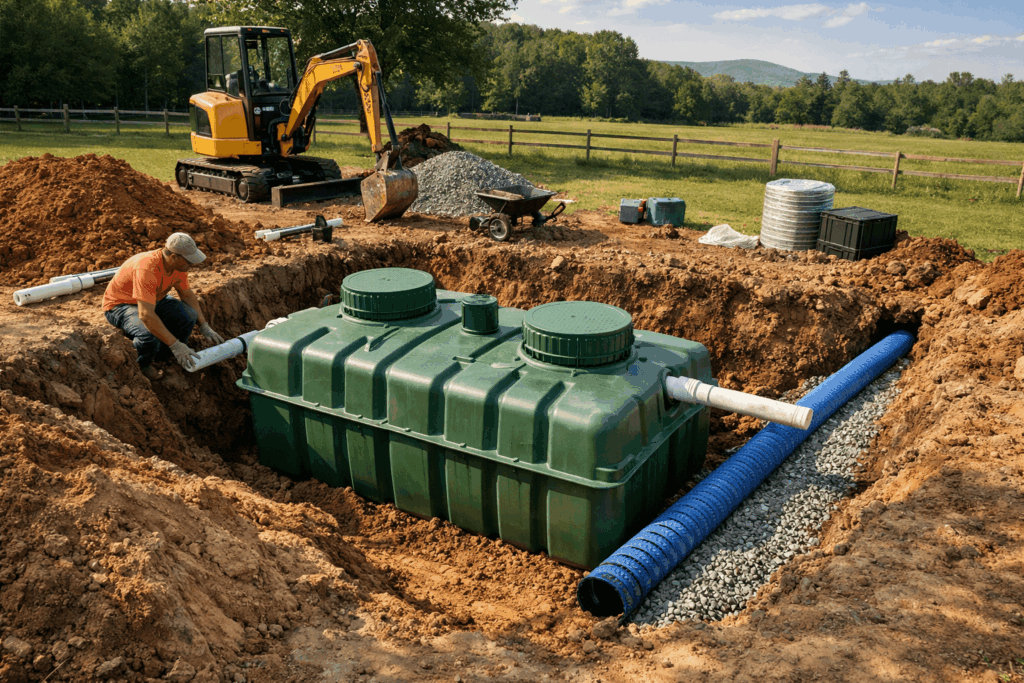
Septic System Design Considerations
System selection depends on:
- Soil characteristics
- Parcel size
- Intended commercial or agricultural use
- Local regulatory standards
More complex properties may require engineered systems. Buyers should consult qualified professionals and obtain written estimates prior to final capital allocation decisions.
Private Well Installation Considerations
Water well depth, drilling method, and production capacity vary based on site geology and intended operational use. Water access feasibility affects development timelines and total project cost.
Due diligence should include:
- Local drilling requirements
- Permit approvals
- Expected depth ranges
- Water quality testing standards
Infrastructure access enhances long term asset utility and transferability.
Permits and Regulatory Compliance
Septic and well installation require approval from applicable county or state authorities. Noncompliant installations can result in penalties, remediation costs, or project delays.
Commercial buyers should retain:
- Permit approvals
- Inspection documentation
- Engineering reports
- Contractor agreements
Proper documentation supports transaction defensibility and future resale integrity.
Integrated Development Planning
Preparing raw land for future development requires structured evaluation of infrastructure feasibility early in the acquisition process. Budget modeling should incorporate installation costs, permitting timelines, and engineering requirements.
Infrastructure readiness strengthens:
- Market positioning
- Operational planning
- Commercial usability
- Exit strategy execution
Commercial Positioning Statement
Land By Owner provides land acquisition opportunities intended exclusively for business, commercial, or investment buyers. Transactions are structured for non consumer use. Properties are not offered or marketed for primary residence, personal occupancy, or homestead purposes.
Our focus is transaction clarity, documentation discipline, and acquisition processes aligned with defined commercial objectives.